“Every opportunity to practice movement and breath, is a chance to be with self”
As a trauma-sensitive yoga teacher (RYT 500) I understand how trauma imprints itself in the physical and subtle body — how it lingers in muscles, breath, and nervous system responses. Yoga, as an ancient and embodied practice, holds profound potential for relief, regulation, and healing. Interoception — the body’s ability to sense, interpret, and integrate internal signals is often disrupted during trauma, as the nervous system instinctively shuts it down for survival. Trauma Sensitive Yoga gently supports survivors in reawakening this inner awareness. By cultivating safety, choice, and presence, it creates space for reconnecting with the “feeling self,” inviting the body back into healing.
My classes are strive to be accessible for all bodies and levels, empowering, and equitable, with an ongoing awareness of the systems of oppression that shape each person’s experience. My teaching is informed by elements of somatic practices, sensory visualizations, Ayurvedic principles, and Traditional Chinese Medicine (TCM). By working with the meridians, the energetic pathways within the body, I help students to deepen self-awareness and restore balance, while weaving in yoga nidra to support deep rest and embodied resilience.
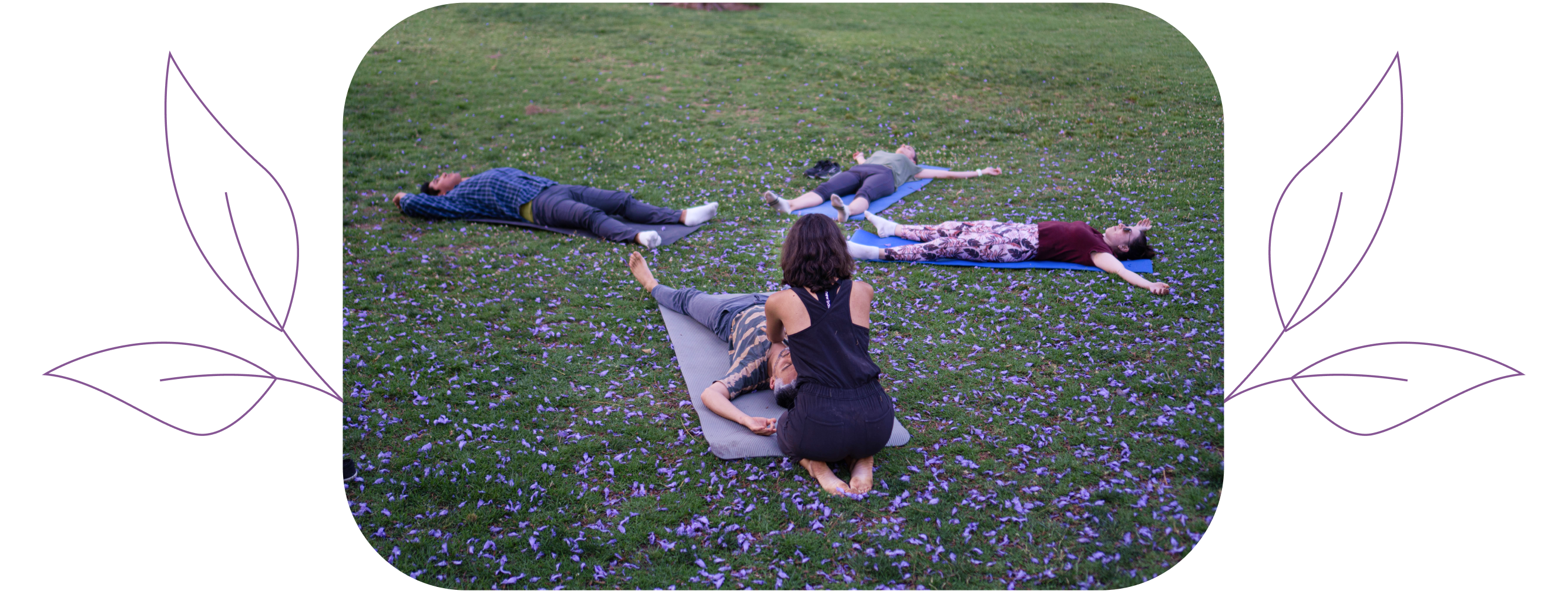
As a yoga teacher, I’ve had the honor of facilitating the practice to adults in community centers, schools, studios, domestic violence shelters, and public spaces.

.jpg)
“Find your breath & you’re practicing yoga. The posture itself is irrelevant. That means you, me, and everyone we know are always practicing yoga in every posture, whether it’s clear to us or not. When you realize yoga isn't just happening when you`re on a yoga mat, it becomes clear that the breath is the first thing that should be established in every moment & not just when you’re practicing a sequence of postures."
- Jessamyn Stanley